

11 Days in Morocco: From South to North
Are you looking for a road trip that starts in Marrakech and ends 11 days later in Tangier, taking you through Morocco’s spectacular destinations and sights? If so, we have a tailor-made proposal for you: this tour will take you on a road trip where you’ll enjoy not only the destination at the end of each day, but also every stop along the way—fantastic viewpoints, charming villages, and stunning natural landscapes… Every detail counts in making this tour one of the most amazing travel experiences you can imagine
Included/Excluded
- Transfers to and from the airport (Marrakech-Menara upon arrival and Tangier Ibn Battuta upon departure)
- Driver with a private vehicle for the entire itinerary
- Three nights in a riad in Marrakech, with breakfast only
- One night at a riad hotel in Ouarzazate, with half-board (dinner and breakfast)
- One night in a luxury tented camp in the Erg Chebbi dunes, with half-board (dinner and breakfast). Depending on the package, you’ll take your morning shower at the camp or at a hotel in Merzouga
- One night at a hotel in the Merzouga Desert, with half-board (dinner and breakfast)
- Two nights in a riad in Fez, with breakfast only included
- One night in a riad in Rabat, based on breakfast only
- One night in a riad in Chefchaouen, including breakfast
- Guided Tours in Marrakech and Fez
- Camel ride through the Erg Chebbi dunes (each participant will have a camel)
- Arrival flight (to Marrakech) and departure flight (from Tangier)
- Lunches
- Dinners in Marrakech, Fez, Rabat, and Chefchaouen
- Beverages
- Tip
- Admission fees for museums and monuments
Tour Plan
The tour is long and comprehensive. The first day should not be spent disembarking and acclimating to the country, its pace of life, and its environment. It is easy for your staff to make their way to the airport terminal for your private transfer to the riad in Marrakech. After checking in, you’ll have a few hours of free time before returning to the lodge’s picturesque rooms or spending the night there.
To explore Marrakech in depth, consult the official local guidebooks. There you’ll find information on the most beautiful neighborhoods of the medina, as well as on the most authentic buildings. Some of these buildings were constructed during the Almoravid era, when the city became the capital of their empire. The other two are more recent, but their charm and exotic style remain very appealing.
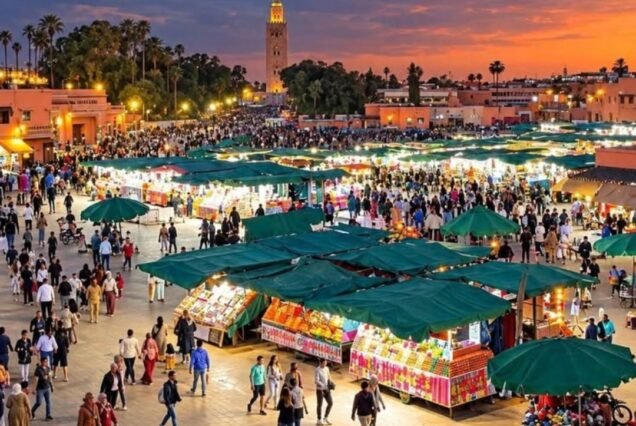
This is not the case of Jemaa el-Fna square, which is the nerve center and popular city, thanks to its market full of stalls and restaurants. The Koutoubia Mosque will be on our way and, although only Muslims can visit its interior, its minaret will enchant us. The tombs of Sa'did are an equally important monument in this dynasty, which also ruled the royal family in the 16th and 17th centuries. The Bahia Palace was built as part of one of the finest examples of local architecture. And like these examples, there are many others full of beauty.
Although it is a very complete guided tour, it is impossible to see everything in one morning. This is not the case for Marrakech to be listed as a UNESCO World Heritage Site for the richness of its history and monuments. The afternoon can therefore serve as a complement to those who did not sufficiently enjoy the morning walk. The museums, gardens and souks of the centre are suggestions to be considered for the afternoon, which will be free. And in the evening, you will rest again in the riad of the medina.
Before starting our road trip in the desert, this tour includes a must-see excursion to Essaouira, nicknamed the "pearl of the Atlantic" for its beauty and location at the foot of the ocean. We will go there along the route and, on the way, we will have the chance to see vast fields of argan trees. We will also stop for visitors of a local cooperative that extracts its precious oil as in the past.
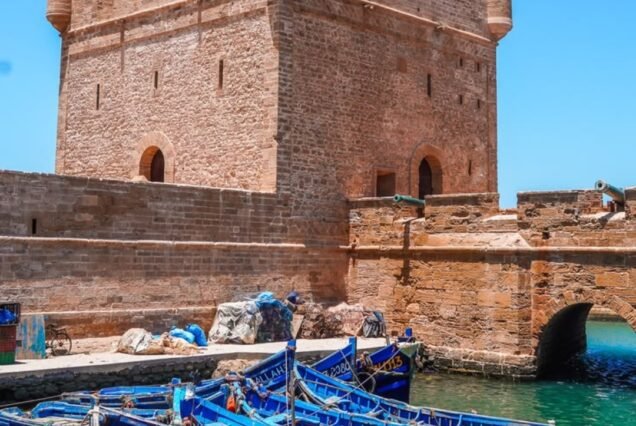
If you are in Essaouira, the visit is free, but you can have no indication of what you are visiting... it’s beautiful. The monument is also visited and photographed to scale, a maritime fort of Portuguese origin and style (16th century), possibly rebuilt from the 19th century. The medina, a World Heritage Site, is located in the shelter of the citadel. The fishing port at the foot of the ramparts, the large square Moulay Hassan, the Jewish mellah or the beaches south of the city will be other places that will fascinate you during your walk.
In the afternoon, our return to Marrakech by the same highway as the outward journey, to rest at the end of the day in the riad of the two previous nights.
On this fourth day of the tour, we definitively leave Marrakech to start our journey through other regions of Morocco. And we start with the monuments, landscapes, surprises and emotions that can be found on the other side of the Atlas Mountains. To that end. We will head towards the Tizi n'Tichka pass, at more than 2,200 meters above sea level, where we will arrive through fertile valleys that are home to farms and picturesque villages.
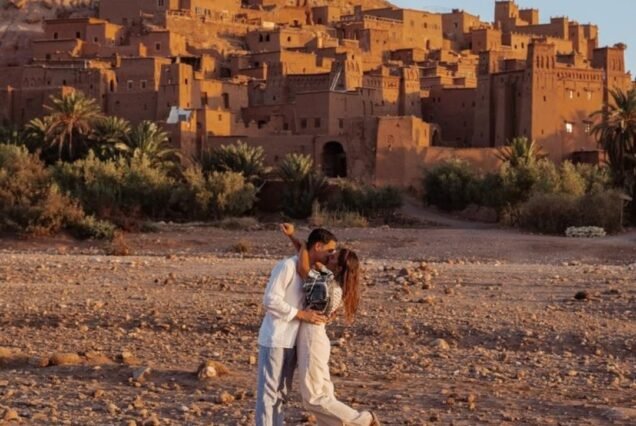
But from Tizi n'Tichka, the landscape changes markedly. The terrain becomes much drier, a sign that the desert is getting closer. At the end of the descent, our first visit of the day arrives: Ait Ben Haddou. This is a spectacular ksar or fortified village, probably built in the 17th century, although it is known that the site was fortified as early as the 11th century. It is therefore the period of the Almoravid empire, which ruled from Marrakech but whose possessions extended to Timbuktu. There was an important trade route between the two cities, one of the most important steps of which was here.
After admiring the ksar of Aït Ben Haddou from inside and outside, we arrive in Ouarzazate, famous for its Atlas film studios, which have earned it the nickname "Hollywood of Morocco". But the main monument is the kasbah of Taourirt, which we will visit to "travel" at the time when Thami El Glaoui, the great Pasha of Marrakech, resided in this castle-palace.
After this visit, we will go to the hotel-riad where we will rest for the night and have dinner to recharge our batteries of this long day.
On this fifth day of the tour, we enter the pre-Saharan valleys, especially the Valley of Roses and the Dadès Valley. In the first, rosebushes abound, whose flower is a very important raw material here for its cosmetic and artisanal uses. In the second, we will perceive this particular mixture of rocky hills, palm oasis and farmland by the river. There are many kasbahs and small mud brick villages with a Berber atmosphere, such as Tinghir.
One of the detours of the road will allow us to reach the amazing Todra gorge: this rocky canyon is a natural corridor between high vertical walls (more than 100 meters), created by the erosion of this seasonal river since time immemorial. Walking at the bottom of this canyon is a real experience. But what is even more so is to climb its walls, as climbers do around the world.
The road passes through the palm groves of Tinjdad and Touroug, then through Erfoud. This city is known for its marbles and fossils, which will fascinate lovers of archaeology and paleontology. Shortly after, we will arrive in Merzouga, a small town that has positioned itself as the starting point of the routes that lead to the dunes of Erg Chebbi, located next door.
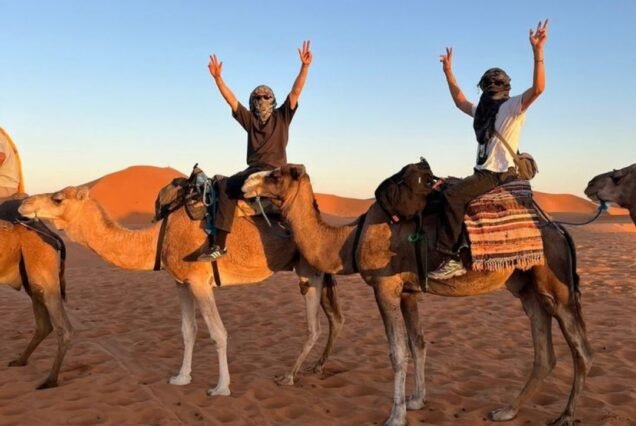
This is what we will do at that moment, and we will do it in the most traditional way: on camels, which will lead us, guided by a Touareg, to the luxury tent camp located in the heart of this sea of fine golden sand. We will be greeted with a welcome tea, have dinner in a familiar and relaxing atmosphere, then fall asleep by starlight.
The spectacle of the desert can be appreciated in infinite nuances. These include daytime and nighttime lights, as well as transitions between the two. The sun lounger has a special aura, so you have the chance to live on the camel’s side promenade. But the dawn of the next day, that is to say the sixth, has nothing to envy. It is therefore worth getting up early to attend this show of colors.
After a light lunch, return to Merzouga to prepare for an exceptional day. The first of the Khamlia cycle also honors the community of Moroccan origin, coming from Sudan and other countries in sub-Saharan Africa: from past centuries, slaves along the caravan routes, but also virtuosos of enchanting music, with a concert of Gnawa music, a folklore protected by UNESCO and listed as an intangible cultural heritage of humanity.
Now afterwards, the course is on gold and far from the ground. There is a problem, but it’s the other way around: our object is an adventure in the Paris-Dakar rally, over the decades. In this stony hamada landscape, you found the kohl mines exploited during the French Protectorate because of their importance for the cosmetics industry. They are now abandoned, like other villages that we will see along the road.
The afternoon will be devoted to a most enriching experience: living for a few hours with nomadic families who still live like their parents, grandparents... and several generations before. Although they assimilate certain habits of sedentary people, the lifestyle remains diametrically opposed to that of the West. So they will have a lot to teach us during this pleasant moment.
Then we return to Merzouga, but we will take the opportunity to contemplate the dunes from a high and strategic point, which will allow us to understand the enormous size of this sea of sand (about 22 long x about 5 km wide), one of the largest in Morocco. In Merzouga, we will have dinner and rest in a charming desert hotel.
On the seventh day of the tour, we say goodbye to the desert and the vast region south of the Atlas Mountains. And we will do it by a long journey in the valley of Ziz, that we will go up to its source in the Middle Atlas.
But before that, the rest of another visit of interest, very close to Merzouga: it is about Rissani, a small town which preserves a beautiful Medina, with historical monuments, like the mausoleum of Moulay Ali Chérif, founder of the Alaouite dynasty, currently on the throne of Morocco. It’s interesting for Rissani, it’s a popular culture, these scenes are daily. For example, the souk of animals, the parking of trees or the sale of traditional products.
Many of these images will remain in our minds during the rest of the road, but they will give way to others, equally beautiful, when we reach the north face of the Middle Atlas. You will be surprised by the two gables of the city of Ifrane, nicknamed the "Switzerland of Morocco". But above all, we will be struck by the greenery of the Ifrane National Park, people of thousands and thousands of cedars, one of the national trees of the country. It is not a danger in this area, which is the best refuge for macaques of Barbary, a particular protection against this larger community... as we will soon discover, since they will come to meet us.
After the landscapes of the greenest Morocco, we will arrive in Fez, one of the four imperial cities of the country (with Marrakech, Meknes and Rabat) and one of the most interesting from a cultural, religious and artistic point of view. That day, however, we will just rest in the riad of the medina to regain strength for the next day.
Fez is a city that fascinates all its visitors. Surrounded by its monuments, it offers a fascinating art, whether architecture or what calls it the "minor arts", that is to say craftsmanship, which in this city reaches extraordinary heights of mastery. That is why, because of the importance of religion and for many other reasons, it is listed as a UNESCO world heritage site.
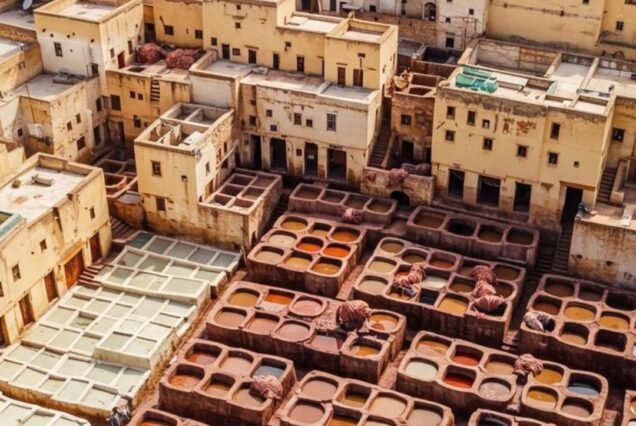
As in Marrakech, we now have the tour of this city: time for a guided tour with an official guide and the other part of the city. During the guided tour, we visit the most emblematic parts of the medina, which is the largest in the country and divided between the old medina (Fez el Jedid) and the new medina (Fes el Bali), although both date back to medieval times. These mosques (external visits), the Nejjarine square and the fountain, these médersas (Bou Inania) or these souks and craftsmen’s quarters (tanners) are still alive as the visitor believes themselves to another time of history.
In the afternoon, you can visit the forgotten of the morning (royal palace, mellah, etc.), buy prestigious handicrafts (ceramics, wood, jewelry, tapestry, etc.), visit a museum or simply stroll without but precise to breathe the atmosphere of the Medina. Anyway, a good night’s rest at the riad will be very comforting.
On the new day of the tour, we bid farewell to the spectacular imperial city of Fez to visit the remaining cities: Meknes and Rabat. The route is simple, on a highway, and the distance to the route is more than 200 km.
Meknes is the closest to Fez and bears the title of imperial to Sultan Moulay Ismail, which was conceived as a capital in the 17th century. That is why it has carried out important constructions, such as its ramparts, of which the Bab el Mansour gate is one of the most important. His mausoleum, of great refinement, allows the visitor to understand the political and private power that he accumulated during his lifetime and that he wanted to leave for posterity.
Once you have strolled through the most emblematic rooms of the medina of Meknes, classified as World Heritage of Humanity, we head to Rabat, another city that also holds these titles: imperial city and World Heritage of Humanity. May have a particular supplement: it is also the current capital of Morocco, and it has some buildings and monuments representative of the region. For example, the Royal Palace and the mausoleum of Mohammed V, king of independence. The Hassan Tower and the Kasbah des Oudayas, with its beautiful views of the Atlantic coast, the flower of Bou Regreg and the village of Salé, are part of a beautiful walk before joining the riad for the night.
The 11-day tour in Morocco touches the river, without exception for the immediate visit of the most specialty: the Chaouen. From the capital, Rabat, we head north by road until we reach the Rif mountains, where this city is located, known as "blue village" due to the predominant color of the walls of its houses.
Chaouen stretches on the slopes of two mountains.The center, nestled in the mountains, offers a maze of alleys, arches and escalators. Corn adds an undeniable touch of charm. Different viewpoints allow you to admire the magnificent panorama of the village, where blue and white stand out against the green background of the surrounding nature. The hamlet of Uta el-Hammam, with its 14th century kasbah, rivals in beauty the spectacular natural landscape.
In Chaouen, the visit will be free, so you can organize your time as you see fit just moment to rest for the night in the riad, located in the heart of the medina.
With your mind filled with wonderful memories, you’ll leave Chefchaouen and Morocco, as on this final day we’ll take a direct transfer from the city to Tangier’s Ibn Battuta Airport at the agreed-upon time after breakfast. There are no services available at the airport terminal, so you won’t have to wait to return and see the tour after 11 full days.
Tour Map
Book Your Morocco Tour


About Us
- © 2026 All Rights Reserved.


